Litter training
Rabbits naturally go in one corner. Put a litter tray there (plant-based litter, never clumping cat litter) with hay next to it: they eat and toilet at the same time.
Small pets are often prey animals: trust comes first. Reward-based methods, and targeting in particular, give amazing results.
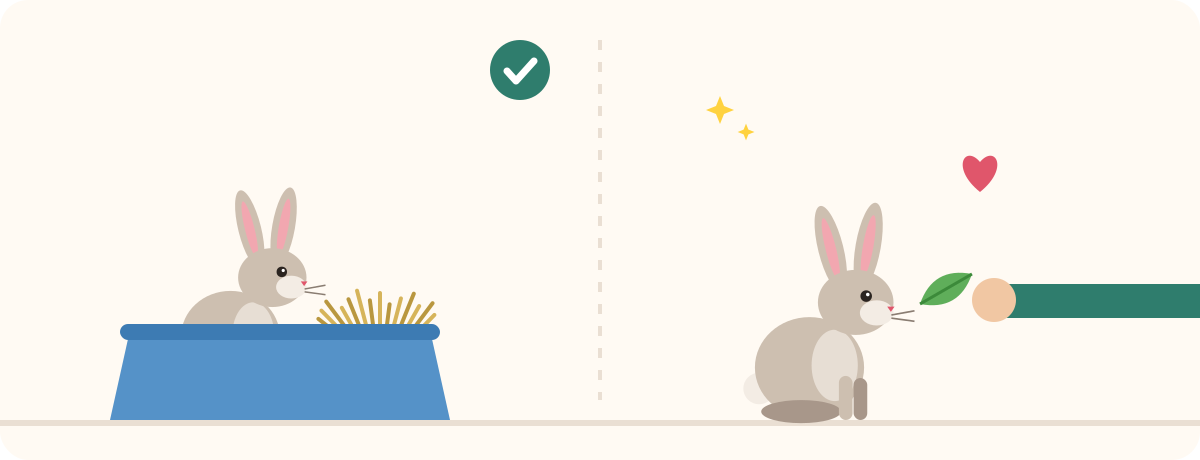
Rabbits naturally go in one corner. Put a litter tray there (plant-based litter, never clumping cat litter) with hay next to it: they eat and toilet at the same time.
Never pick a rabbit up by the ears and avoid lifting it by surprise. Get down on the floor, let it come to you, offer a blade of grass or a piece of vegetable. Being carried is learnt very gradually (cooperative care).
Rabbits can learn to come to their name, touch a target, jump small hurdles or go into their pen. Reward: small pieces of vegetables or fresh herbs.
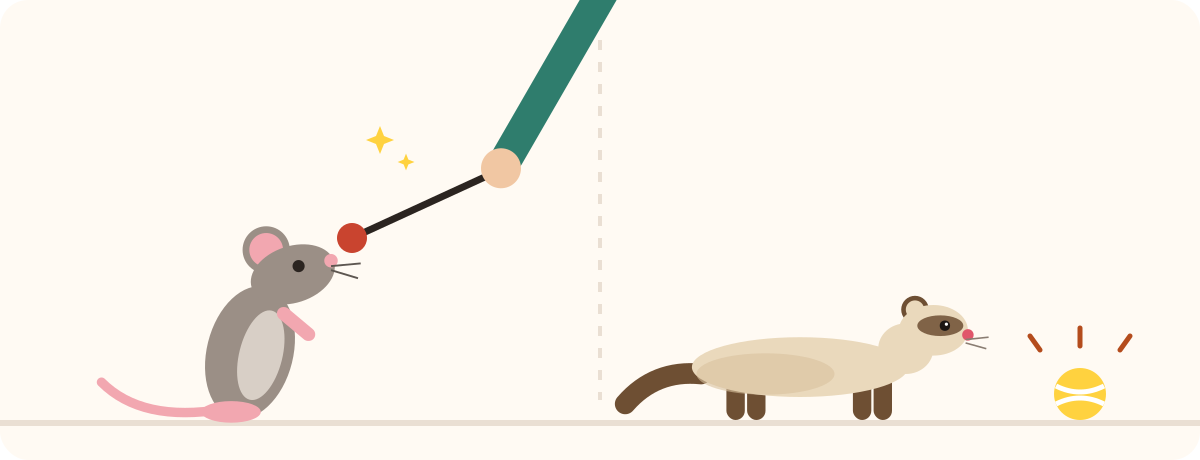
Very intelligent, rats learn their name, recall, pushing levers or running courses. Stick targeting works wonderfully. Reward: a tiny piece of cereal or fruit.
Ferrets play by nipping. If one bites too hard, stop the game and calmly put it down for a few seconds (extinction). Reward gentle play. Ferrets can also learn to use a litter tray and wear a harness.
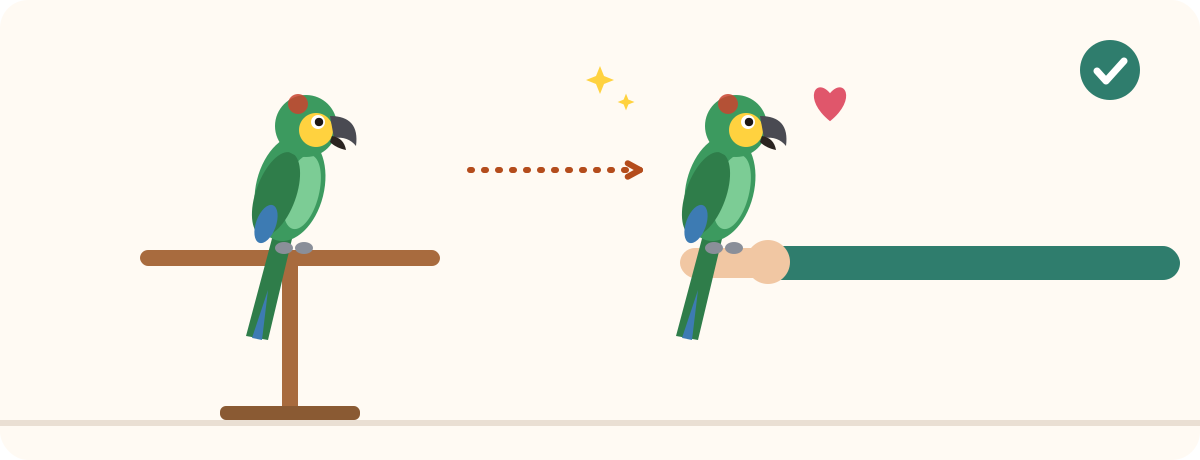
Budgies, cockatiels and parrots are brilliant students. Targeting and the clicker are the basic tools of zoo keepers.
Teach your bird to touch the tip of a stick with its beak. You can then guide it to the cage, the scales or a perch without ever grabbing it.
For talking, use the model/rival method. For screaming, don't come running in response (that reinforces it): reward calm moments and soft sounds.