🐈 Training your cat (yes, it's possible!)

Cats learn very well… as long as you use rewards, very short sessions and plenty of patience. Punishment, on the other hand, doesn't work at all with them.

The 3 golden rules with a cat: 1 to 3-minute sessions, very tasty rewards (wet food, lickable treats) and never any force.

How a cat learns

A cat learns exactly like a dog: they repeat whatever brings them something pleasant. The difference is that they have no wish to please you "for nothing", and they get bored quickly. Hence the importance of rewards they love and very short sessions, ideally before a meal, when they are a little hungry.

Punishment, on the other hand, backfires: a cat who is scolded or sprayed with water doesn't understand what they are being blamed for; they mostly learn to be afraid of you or to misbehave in secret. For most problems (scratching, litter, waking you at night), the solution lies in their needs: scratching, hunting, hiding, having a clean toilet. Meet them, and the annoying behaviour fades by itself.

💅 Scratching

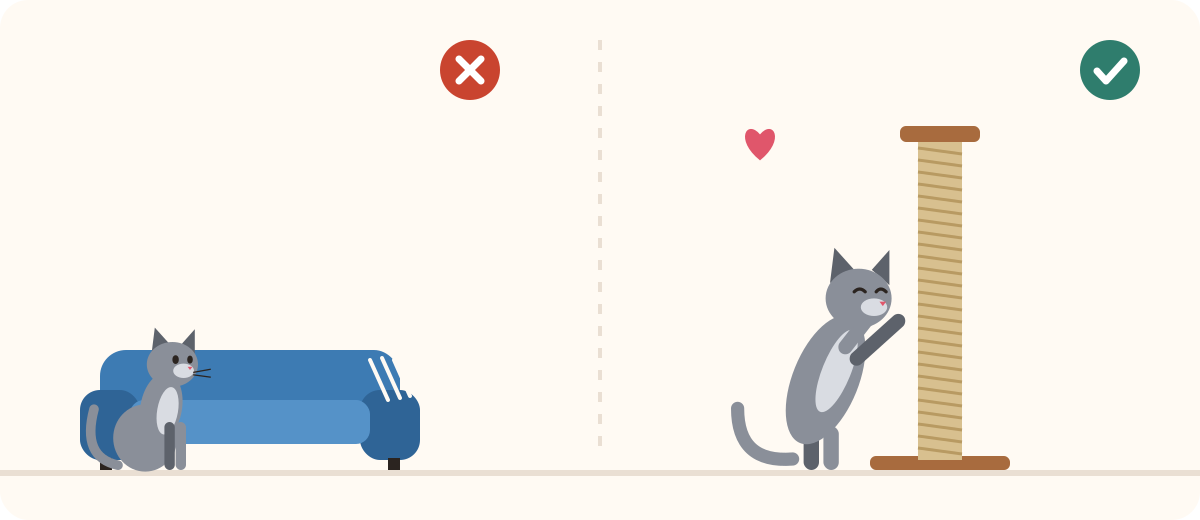
Cat scratching a sofa, then a tall sisal scratching post
Instead of the sofa, offer a tall, stable post: the cat can stretch out fully on it.

Scratching is a vital need (marking, claw care, stretching). You don't stop it, you redirect it:

  1. Place a tall, stable scratching post right in front of the damaged area.
  2. Make it attractive: catnip, play with a wand toy around it.
  3. Reward every scratch in the right place.
  4. Temporarily make the forbidden area less pleasant (a throw, double-sided tape).

👉 Full article

👉 Read: Cat scratching the sofa: 6 solutions that work · Which scratching post should you choose for your cat? Our comparison

📣 Coming when called

  1. Pair a sound (its name, a treat packet rustle, a click) with a favourite treat.
  2. Call it when it is 1 metre away, reward. Repeat.
  3. Increase the distance, then call from another room.

Very handy for finding a hiding cat or bringing it in at night.

🧳 Loving the carrier

  1. Leave the carrier open in the living room all the time, with a blanket.
  2. Drop treats in it at random: it becomes a pleasant place.
  3. Feed meals in it, then close the door for a few seconds.
  4. Lift it a few centimetres, then take short trips.

🎣 Hunting, biting and energy

A cat that ambushes your ankles is often bored. Give it 2 hunting play sessions a day (10 min) with a feather wand, ending with a “prey” treat.

Never play with your hands: it would learn they are prey.

👉 Read: Cat meowing at night: why it happens and how to sleep again

🧠 Understanding your pet

Before training, learn to read their emotions: