Cat scratching the sofa: 6 solutions that work
Your cat isn't scratching the sofa to annoy you. Scratching is a vital need. The goal isn't to stop it, but to offer a better place to do it.
Why cats scratch
- To mark their territory: glands between the paw pads leave scent, and the marks are a visual message.
- To look after their claws by shedding the old outer sheaths.
- To stretch their whole body, often on waking.
The sofa is perfect for all of this: stable, tall, well placed in the living room and full of your scent.
1. A scratching post more attractive than the sofa
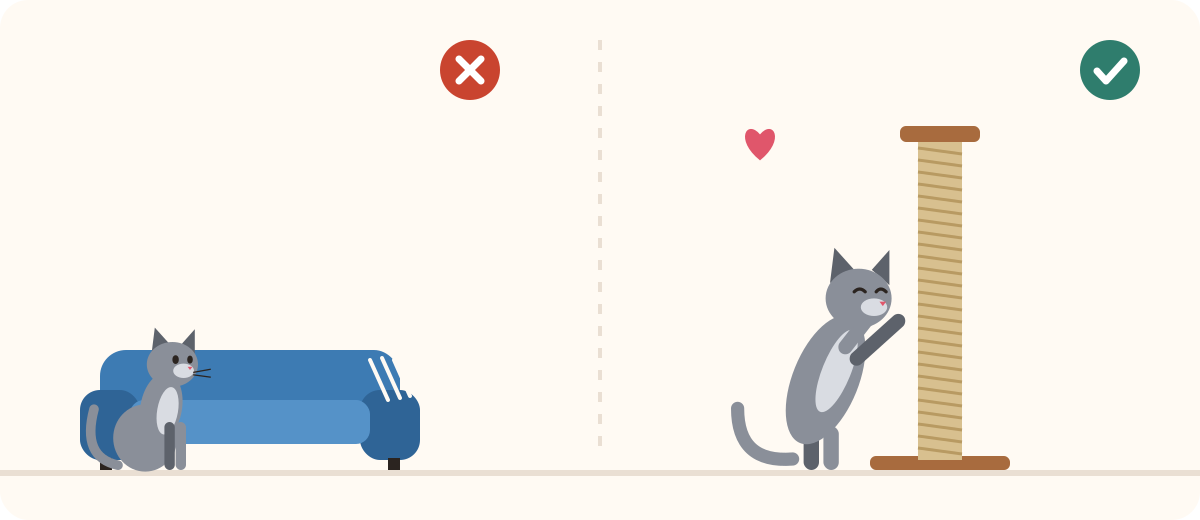
The ideal scratching post is stable (it mustn't wobble), tall enough for your cat to stretch out fully (at least 70-80 cm) and covered in a material it can shred, such as sisal. Small posts that tip over are often ignored.
A weighted sisal column, or a cat tree with a large post.
2. Put it in the right place
Place it right in front of the damaged part of the sofa, not in a hidden corner. Once the habit is formed, you can move it a few centimetres a day. Add another one near where your cat sleeps: cats scratch a lot when they wake up.
3. Add a horizontal one
Some cats prefer to scratch flat surfaces (rugs, doormats). Watch yours: if it goes for the bottom of the sofa or the rug, add a cardboard scratcher on the floor.
Inexpensive and much loved by cats who scratch horizontally.
4. Make it irresistible
Rub some catnip on it, drag a feather wand around and over it so your cat sinks its claws in, and reward (treat, stroke) every time it uses it. That's positive reinforcement.
Many cats react to it, but not all: yours may well ignore it.
5. Make the sofa less appealing (temporarily)
For a few weeks, cover the scratched area with a throw or double-sided tape, which cats don't like touching. That's managing the environment: your cat stops reinforcing the habit in the wrong place while it learns the right one.
6. Look after its claws
Regularly trimmed claws do less damage. Get your cat used to it gently with cooperative care: one claw a day, one treat each time.
Go further: the complete guide to training your cat.
Read next

Best Toys for Indoor Cats: Which to Choose?
Feather wands, puzzle feeders, tunnels or tracks: the toys that truly fulfil an indoor cat.
Cat litter price comparison: real cost per month and which to choose
Clumping, plant-based, silica or clay: pros, cons and how to switch litter without upsetting your cat.
Cat meowing at night: why it happens and how to sleep again
Hunger, boredom, age or heat: understand why your cat wakes you up, then adjust their day for peaceful nights.