Best clicker for dogs and other pets: which one to choose?
The clicker is one of the cheapest and most effective training tools. But they're not all the same: a sound that's too loud can scare a cat, a stiff button tires your hand. Here's how to choose yours.
Reminder: what is a clicker for?
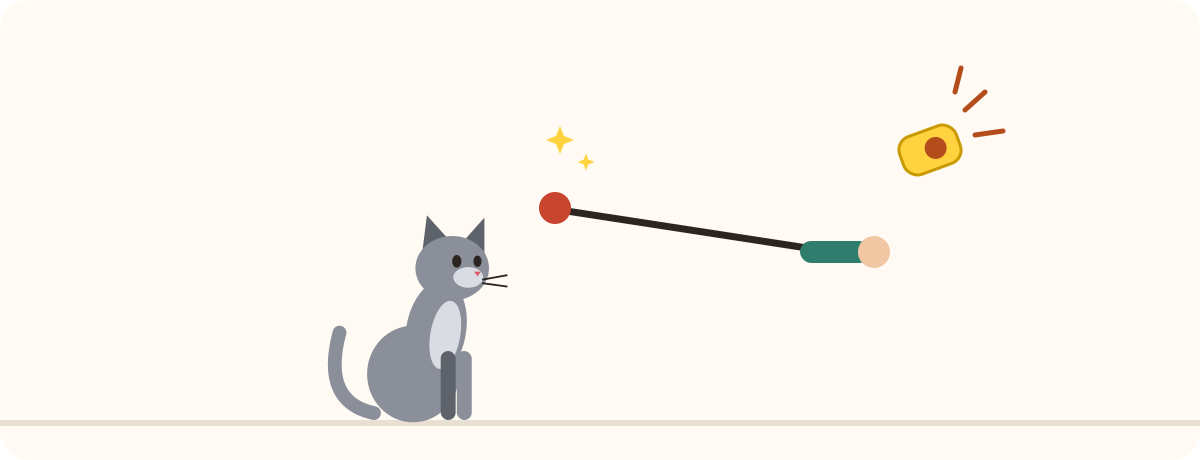
The click is a “marker”: it tells the animal the exact moment it does the right thing, and announces a reward. Its strength is its precision and consistency: the sound is always the same, unlike your voice. The whole method is explained in our guide to clicker training.
The 4 types of clicker compared
| Type | Sound | Strengths | Best for |
|---|---|---|---|
| Classic “box” clicker | Loud, sharp | Easy to hear outdoors, very cheap | Dogs not bothered by noise, outdoor work |
| Button clicker | Medium | Ergonomic, easy to press, often with a strap | Most dogs, beginners |
| Adjustable-volume clicker | Adjustable | Adapts to sensitive animals | Cats, rabbits, fearful dogs |
| Clicker + target stick | Varies | Two tools in one, ideal for targeting | Birds, cats, rabbits, agility tricks |
1. The classic “box” clicker
This is the original model: a small box with a metal tongue. Its loud click carries well outdoors. On the other hand, it can make sensitive animals jump. If so, start by holding it away from you or muffling it in a pocket.
2. The button clicker: the most versatile
The button is easy to press with one finger without looking, which helps you click at the right moment. The sound is a little softer than the classic box. The i-Click, designed by the team of Karen Pryor, one of the pioneers of clicker training, is a well-known model of this type.
The strap or wristband saves you hunting for it mid-session.
A button clicker with a fairly soft sound, designed for clicker training.
3. The adjustable-volume clicker: for sensitive animals
Some models offer several sound levels. It's the right choice for a cat, a rabbit, a small rodent or a fearful dog: start at the lowest volume, then turn it up if needed for outdoor work.
To start gently with an animal that's sensitive to noise.
4. The clicker + target stick kit
The stick (often telescopic, with a ball on the end) is used for targeting: the animal learns to touch the ball, then to follow it. Essential for birds, and very useful for cats, rabbits and agility tricks.
Choose a telescopic stick so you can use it close up or at a distance.
The best clicker for dogs
For most dogs, the best choice is a button clicker with a wrist strap or finger ring: the click is clear and always the same, the button is easy to press, and your hand stays free for the lead and the treats. Choose an adjustable-volume model for a puppy, a sound-sensitive dog or a dog who startles easily.
What makes a good clicker for dogs:
- A consistent sound: the click must sound exactly the same every time.
- Comfort: you will click hundreds of times; a soft button saves your thumb.
- A strap or ring: so you can drop it without losing it during walks.
- Sturdiness: it will end up in pockets, on the ground and sometimes in the rain.
Which clicker for which pet?
- Confident adult dog: button or classic box.
- Puppy or fearful dog: button or adjustable volume, starting at a distance.
- Cat: adjustable volume or a soft button; some cats prefer a short verbal marker.
- Rabbit, rat, ferret: adjustable volume, on the lowest setting.
- Parrot, budgie, cockatiel: clicker + target stick kit.
Get started in 3 steps
- Charge the clicker: click, then treat, 10 to 15 times, without asking for anything.
- Check: when you click, your pet turns towards you expecting its reward.
- Click the right behaviour: start with something simple, like touching your hand, sitting or looking you in the eye, then reward every click.
Keep the rewards within reach: a treat pouch makes sessions much smoother.
The perfect partner for the clicker, so you can reward within a second.
Read more: the clicker training method · shaping · clicker training a cat · training a bird.
Read next
Clicker Training for Beginners: Dogs and Cats
Charging the clicker, first exercises and mistakes to avoid: the step-by-step method for dogs and cats.
Best Puzzle Toys for Dogs: Our Comparison
Puzzles, snuffle mats, dispensers or hide-and-seek toys: which brain game suits your dog.
Teaching your dog "sit", "down" and "stay"
Luring for sit and down, then the "3 Ds" for a solid stay: the gentle method, step by step.