Clicker Training for Beginners: Dogs and Cats
A little "click", a reward, and your pet knows exactly what they did right. Clicker training is one of the clearest and most enjoyable ways to learn, for dogs and cats alike. Here's how to get started, step by step, even if you've never held a clicker.
How does a clicker work?
A clicker is a small device that always makes the same sound. That sound is a marker: it tells your pet "yes, exactly that!" at the precise moment they act. A treat follows right after. Because the click is faster and clearer than a word, your pet understands better what earned the reward.
It's a form of positive reinforcement: you reward what you want to see again. You'll find more detail on our clicker page.
The easiest way to start: clear sound, soft button, and it stays on your wrist.
Not sure which model? Our guide which clicker to choose can help, especially if your pet is sensitive to noise.
Before you start: get your treats ready
- Tiny treats your pet can swallow in a second: you'll give a lot. Take them out of the day's food.
- A treat they love: it's what gives the click its value.
- A quiet place with no distractions, and a pet that's neither starving nor full.
- A treat pouch so the treats are always to hand: timing matters.
Treats within reach, so you can reward right after the click.
To choose, see our guides to training treats and treat pouches.
Step 1: "charge" the clicker
At first, the click means nothing to your pet. You need to pair it with the reward:
- Click once, then give a treat straight away. Your pet doesn't have to do anything.
- Repeat about ten times, varying the moment a little.
- Test it: click when they're looking away. If they quickly turn to you or to the treat, it worked: the click now means something.
If your pet jumps at the sound, hold the clicker further away, click inside your pocket, or use an adjustable-volume clicker.
Step 2: an easy first exercise, touching your hand
Targeting is a great first exercise for dogs and cats:
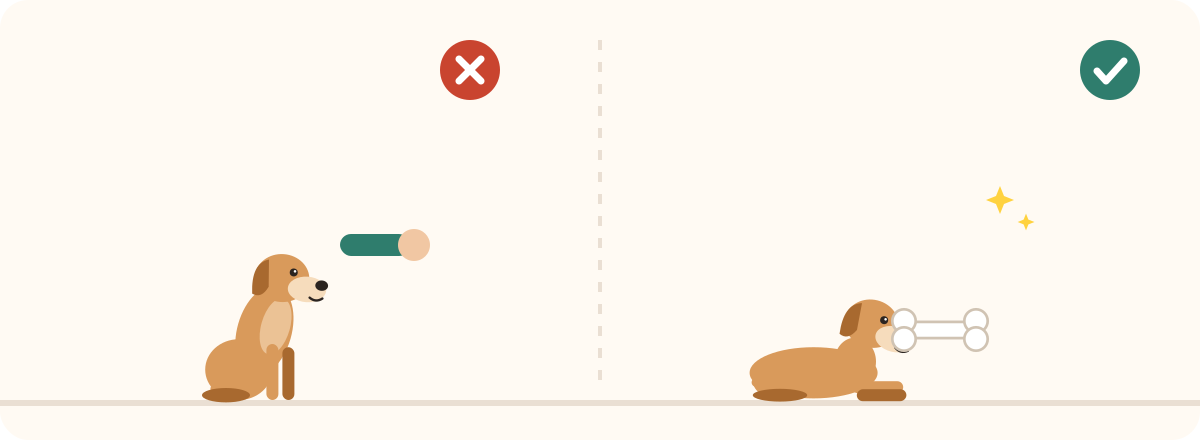
- Hold your open hand a few centimetres from their nose.
- Out of curiosity, they'll sniff it: the moment their nose touches your hand, click, then treat.
- Repeat, moving your hand a little. When they touch it every time, add a word ("touch") just before offering your hand.
This little trick is useful for everything: moving your pet without pulling, getting them onto the scales, calling them to your side.
Step 3: capturing and shaping
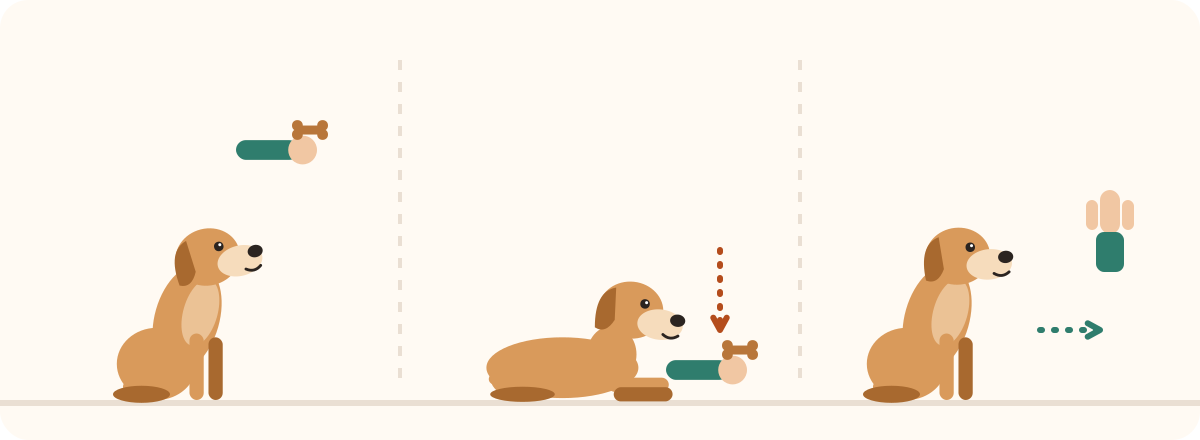
- Capturing: click a behaviour they already do on their own, like sitting or lying down. They quickly learn they can "make" the click happen (see capturing).
- Shaping: for a more complex behaviour, click each small step towards it, then gradually ask for more (see shaping).
That's how you can teach "sit", "down" and "stay", as well as tricks and useful behaviours for care.
The golden rules
- One click = one reward, always, even if you clicked a little early.
- The click ends the behaviour: it's normal for your pet to move after the click.
- Short sessions: a few minutes, and stop on a success.
- Don't use the clicker to call your pet or to get their attention.
- No empty clicks: never click without rewarding, or the click loses its value.
What about cats?
Cats learn very well with a clicker! Use a very tasty treat (paste, a piece of cooked chicken), even shorter sessions, and a soft-sounding clicker if your cat is sensitive. Useful first exercises: touching your hand, coming when called, going into the carrier, hopping onto a stool. Many indoor cats love these sessions as much as play: add some good toys for indoor cats too.
Common mistakes
What next?
Once a behaviour is reliable and linked to a word, you can gradually drop the clicker for that behaviour and reward it in other ways (praise, play, an occasional treat). Keep the clicker for new learning. To keep your dog's mind busy between sessions, puzzle toys are a great addition.
Read more: which clicker to choose? · the best puzzle toys for dogs · the best toys for indoor cats · all the methods · the dog guide · the cat guide.
Read next
Best Puzzle Toys for Dogs: Our Comparison
Puzzles, snuffle mats, dispensers or hide-and-seek toys: which brain game suits your dog.
Teaching your dog "sit", "down" and "stay"
Luring for sit and down, then the "3 Ds" for a solid stay: the gentle method, step by step.
Which treat pouch to choose? The comparison
Clip, waist bag, silicone or vest: which pouch to choose to reward your dog at the right moment, at home and on walks.