Dog barking when left alone: understand it and help
The neighbours are complaining, you feel guilty going to work, and you have no idea what's happening behind the door. The good news: a dog can learn to stay home alone calmly. The key is to understand why they bark, then move forward in small steps, without ever punishing them.
Why your dog barks when you leave
Dogs are social animals: being alone doesn't come naturally to them, it has to be learnt. Barking can have several causes, and the solution depends on finding the right one:
- Boredom or not enough exercise: the dog hasn't walked, sniffed or played enough, and is looking for something to do.
- Noises outside: they react to the postman, neighbours on the stairs, other dogs. This alert barking comes in waves, not continuously.
- Separation-related distress: they bark or howl as soon as you leave, scratch at the door, drool, have accidents or chew things near the exits, and won't touch their treat. They're genuinely unhappy; it isn't naughtiness.
- Never having learnt: a puppy or an adopted dog has never been taught to stay alone gradually.
Step 1: observe before you act
Film your departures with your phone or a camera: when do they start barking? For how long? What do they do between barks? This tells you which cause is most likely, and lets you measure progress. We've compared the options in our guide which camera to keep an eye on your pet.
To see what really happens while you're out, and follow their progress.
Step 2: meet their needs before you go
A dog who has burnt off their energy settles more easily. Before you leave, give them a proper walk where they can sniff at their own pace (it's very tiring mentally), some play, then a quiet moment. It isn't a miracle cure if your dog is in distress, but it's the foundation.
Step 3: make departures and returns boring
- No big goodbyes: leave calmly, without long cuddles or speeches.
- Calm returns: greet them quietly, then give them attention once they've settled.
- Defuse the leaving cues: many dogs get worried as soon as you pick up your keys or coat. Do these things several times a day… without leaving. Little by little, they'll lose their meaning.
Step 4: teach them to be alone, step by step
This is the heart of the method, based on desensitisation: getting the dog used to absences so short that they stay calm, then lengthening them very gradually.
- Step out for a few seconds, close the door and come back before they bark.
- Repeat several times a day, gently lengthening the time: 10 seconds, 30 seconds, 1 minute, 2 minutes…
- If they bark, the step was too big: go back to the previous duration they could manage.
- Vary the durations (sometimes shorter) so your absences don't become predictable.
This can take weeks: that's normal. What matters is that they succeed almost every time. The camera shows you whether they're truly relaxed.
The tricky part: during training, avoid long absences that are too much for them if you can. Have a friend or relative, a neighbour, a pet sitter or a dog day care look after them whenever possible.
Step 5: give them something enjoyable to do
As you leave, give them a stuffable toy filled with part of their daily food. They link your departure with something positive and keep themselves calmly busy. Compare the options in our guide which enrichment toys for a dog left alone.
Filled and frozen, it keeps them busy for a long time. Safe to leave with them if it's the right size.
If they don't touch the toy while you're away, it's often a sign of significant stress: see below for when to see a vet.
Step 6: reduce the noises that set them off
If your dog mostly barks at noises outside, adapt their space: this is managing the environment.
- Settle them in a quiet room, away from the front door and the stairwell.
- Block access to street-facing windows, or cover the lower part with frosted film.
- Leave some soft background sound (a radio at low volume) to mask some of the noise.
When should you see a vet?
If your dog shows signs of serious distress (prolonged howling, destruction, injuries from scratching, drooling, house soiling, refusing to eat when alone), talk to your vet. They can check that no health problem is involved and, if needed, refer you to a veterinary behaviourist. In some cases, medication can support the training: only a vet can prescribe it.
Go further: which enrichment toys for a dog left alone? · which camera to keep an eye on your pet? · positive reinforcement · the complete dog guide.
Read next
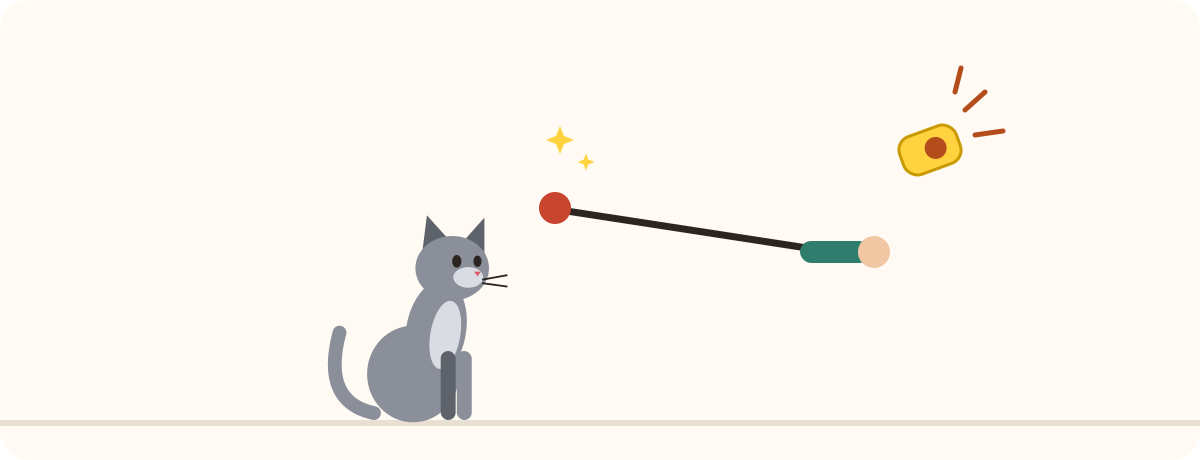
Clicker Training for Beginners: Dogs and Cats
Charging the clicker, first exercises and mistakes to avoid: the step-by-step method for dogs and cats.
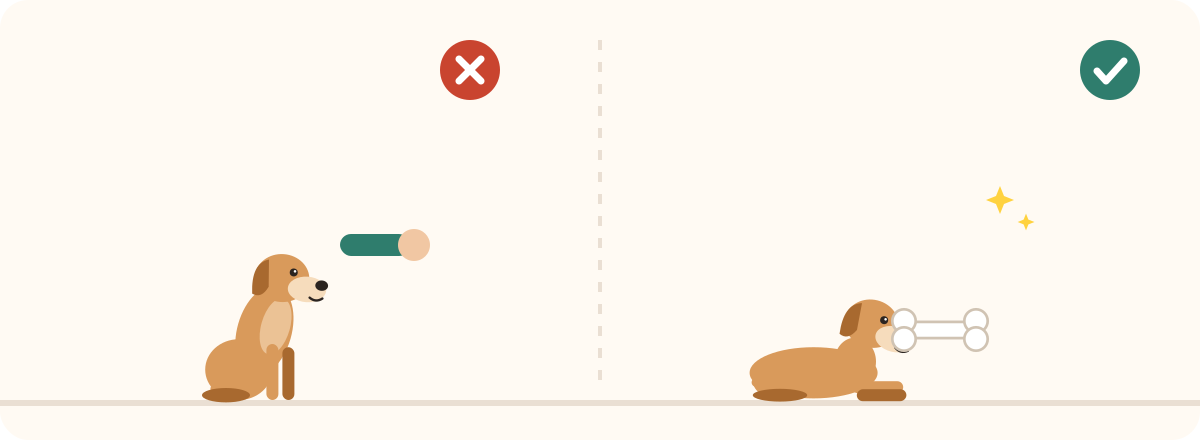
Best Puzzle Toys for Dogs: Our Comparison
Puzzles, snuffle mats, dispensers or hide-and-seek toys: which brain game suits your dog.
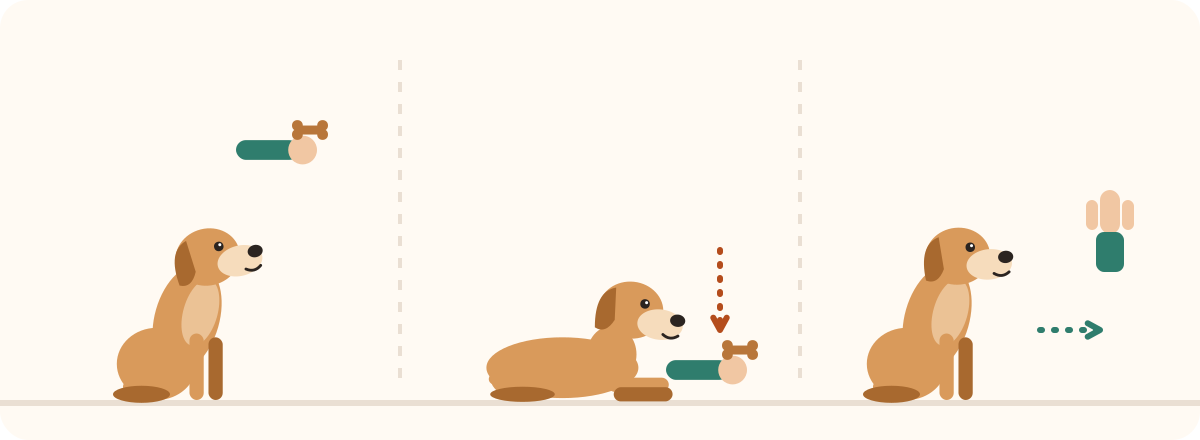
Teaching your dog "sit", "down" and "stay"
Luring for sit and down, then the "3 Ds" for a solid stay: the gentle method, step by step.