Which treat pouch to choose? The comparison
In training, everything happens in a second: the reward must arrive while your dog is doing what you want. Digging in a pocket or a bag is often too late. A well-chosen treat pouch changes everything. Here are the different types and their advantages.
What to look for
- One-handed opening: the key criterion. You often hold the lead in your other hand. Rigid or magnetic openings stay open during the exercise and close with one gesture.
- Closing: when you bend down or run, treats must not fall out. Otherwise your dog mostly learns to stare at your feet.
- Washing: treats leave grease and smells. A removable lining or a silicone model is much easier to clean.
- Attachment: clip on your belt or pocket, adjustable belt, or carabiner. Check it stays put when you move.
- Extra pockets: for poo bags, the clicker, keys, phone.
The 5 types of pouches compared
| Type | Strengths | Limits | Best for |
|---|---|---|---|
| Clip-on or belt pouch | Simple, quick opening, compact | Little room for anything else | Most owners |
| Training waist bag | Lots of storage, stays in place | Bulkier | Long walks, classes |
| Silicone pouch | Washes in seconds, doesn't keep smells | Small capacity | Soft or moist treats |
| Pouch with bag dispenser | Everything in one place | A little heavier | City walks |
| Training vest | Many pockets, hands free | Expensive and conspicuous | Enthusiasts, dog sports |
1. The clip-on or belt pouch
The most common model: a small pouch with a rigid opening that clips onto your belt or trouser pocket. It opens with a press and stays open during the session. Ideal for exercises at home and short walks.
Choose one with a self-closing opening and a washable lining.
2. The training waist bag
Worn on the waist or across the body, it combines a large treat pocket with several compartments for your things. Handy for long walks or training classes, when you want everything on you without a backpack.
Check that the treat pocket is separate from your belongings.
3. The silicone pouch
Flexible, it opens when you squeeze the sides and closes by itself. Depending on the model, it can be rinsed or put in the dishwasher, and it doesn't keep smells. Perfect for soft treats or small pieces of chicken, which make fabric pouches dirty.
Easy to wash: ideal for moist treats.
4. The pouch with bag dispenser
A classic treat pouch with a built-in roll of poo bags. Everything is in one place, and you never forget the bags. A good choice for daily walks in town.
Check that the treat pocket still opens easily with one hand.
5. The training vest
Used by trainers and in some dog sports, it offers many pockets and leaves your hands completely free. It's more expensive, useful if you do lots of sessions or activities with your dog. For everyday use, a pouch is plenty.
For enthusiasts: check the size and access to the pockets.
Pouch and clicker: a practical pair
If you use a clicker, choose a pouch with a ring or small pocket to attach it. The click marks the right behaviour at the exact moment, and the treat follows straight from the pouch. With both to hand, your sessions flow better and your dog understands faster what earns a reward. Our comparison which clicker to choose helps you find the right model.
Using it well
- Prepare the session: fill the pouch with treats already cut, in a suitable amount.
- Keep your hands empty between rewards: your dog learns to do the exercise, not to follow your hand. That's the whole point of the pouch, especially when you phase out the lure.
- Wash it often, especially with moist treats.
- Store it out of reach: many dogs know exactly where the treats are.
Read more: teaching "sit", "down" and "stay" · which training treats to choose? · which clicker to choose? · loose-lead walking.
Read next
Clicker Training for Beginners: Dogs and Cats
Charging the clicker, first exercises and mistakes to avoid: the step-by-step method for dogs and cats.
Best Puzzle Toys for Dogs: Our Comparison
Puzzles, snuffle mats, dispensers or hide-and-seek toys: which brain game suits your dog.
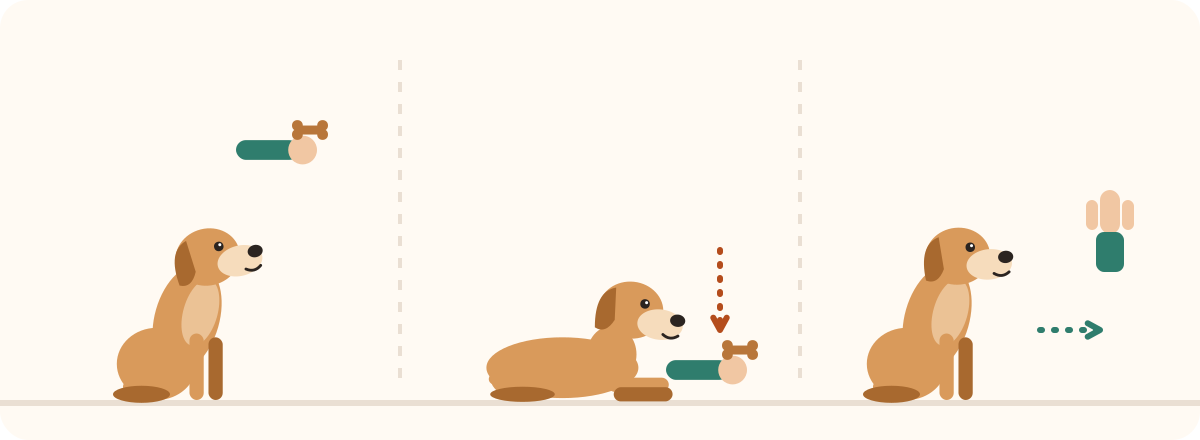
Teaching your dog "sit", "down" and "stay"
Luring for sit and down, then the "3 Ds" for a solid stay: the gentle method, step by step.