Dog pulling on the lead: how to make it stop
Aching arms, exhausting walks, a dog choking itself… Pulling on the lead is one of the most common problems. The good news: you can fix it without force, just with consistency.
Why dogs pull
Quite simply because it works: every time your dog pulls, it moves towards what it wants to sniff. Dogs also naturally walk faster than we do. It isn't trying to “dominate”: it has simply learnt that pulling is effective.
The golden rule: tight lead = we stop
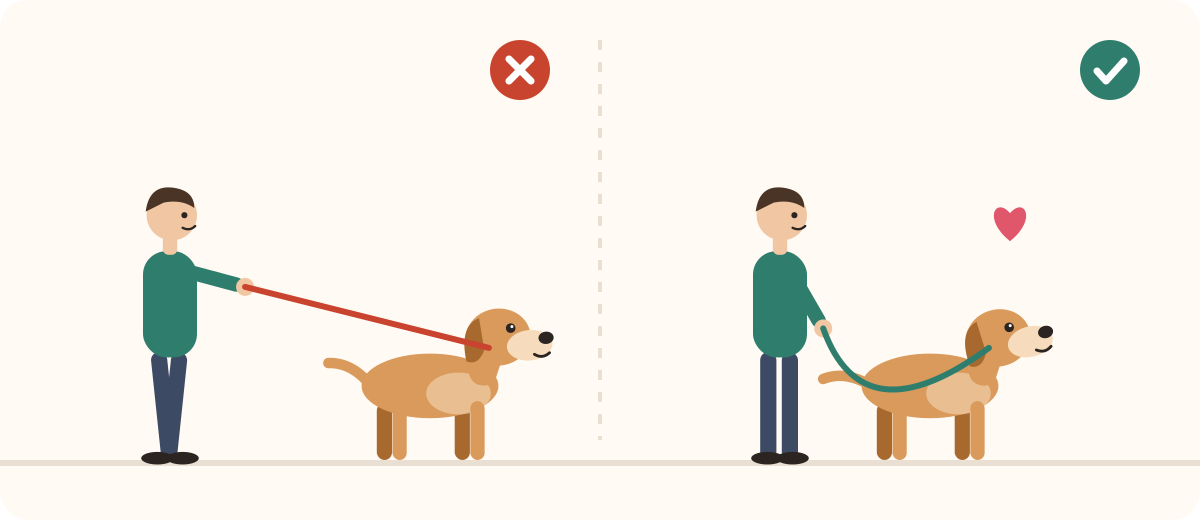
This is the “be a tree” method. As soon as the lead goes tight, you freeze like a tree. You wait for your dog to release the tension (it turns round, takes a step back, sits). As soon as the lead is loose again: “Yes!” and off you go. It learns that a loose lead makes you move forward.
It's a direct application of the Premack principle: moving towards what interests your dog becomes its reward.
Reward the right position
While walking, every time your dog is at your side with a loose lead, mark it (“Yes!” or a click) and give a treat next to your leg. At first, reward every 2-3 steps, then space it out.
Small and soft, they're eaten in a second without breaking the rhythm of the walk.
Changes of direction
If your dog charges ahead, turn round gently while cheerfully inviting it to follow you, then reward when it catches up. It learns to keep an eye on you, because you're unpredictable.
The right equipment
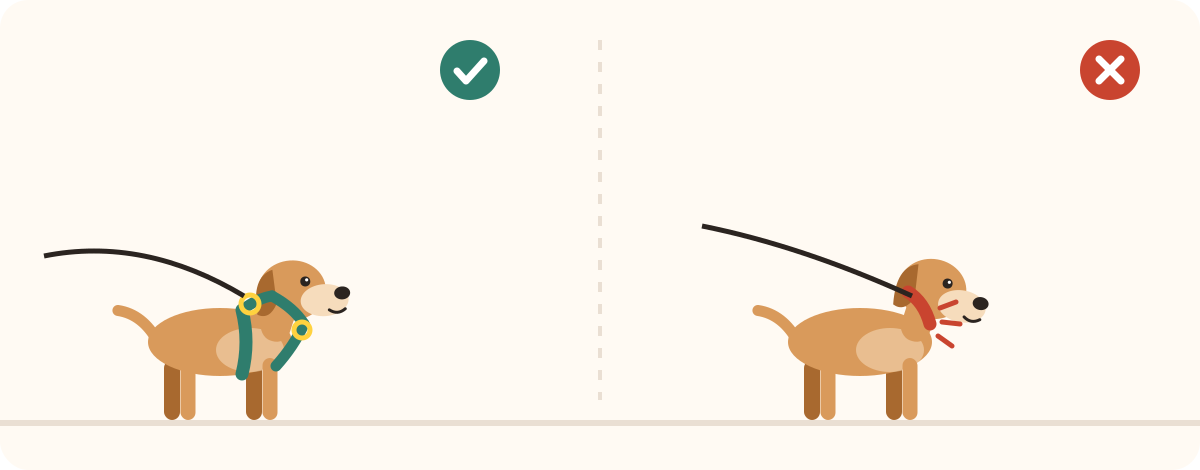
A collar that a dog pulls against presses on the windpipe and throat. A Y-shaped harness, which leaves the shoulders free, is far more comfortable and safer. Combined with a 2 m lead, it gives enough slack for your dog to walk without tension.
Choose one that fits well (two fingers under the straps) and doesn't cross in front of the shoulders.
How long does it take?
The first progress shows within a few days if the whole family applies the same rule on every outing. For quick “toilet” walks when you don't have time to train, use different equipment (e.g. back clip of the harness for training, front clip for quick outings) so the rules don't get mixed up.
Go further: teach a reliable recall in 7 steps · the complete dog guide.
Read next
Clicker Training for Beginners: Dogs and Cats
Charging the clicker, first exercises and mistakes to avoid: the step-by-step method for dogs and cats.
Best Puzzle Toys for Dogs: Our Comparison
Puzzles, snuffle mats, dispensers or hide-and-seek toys: which brain game suits your dog.
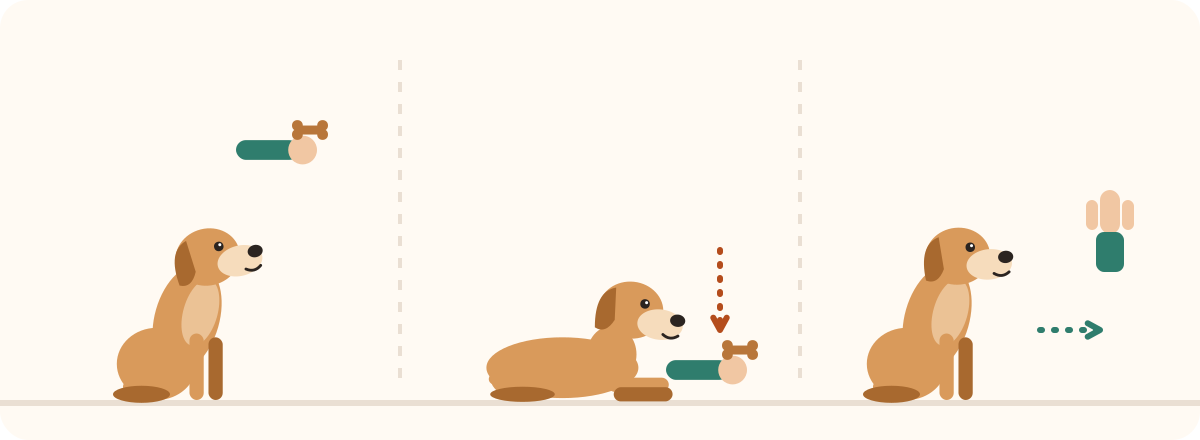
Teaching your dog "sit", "down" and "stay"
Luring for sit and down, then the "3 Ds" for a solid stay: the gentle method, step by step.