How to teach your dog a reliable recall in 7 steps
A dog who comes back when called means more freedom for them and less stress for you. Recall isn't about having a “good” or “bad” dog: it's a skill, built step by step.
Why your dog doesn't come back
In your dog's mind, the question is simple: what's in it for me? If the smell in the grass, the dog friend or the squirrel is more interesting than you, the smell wins. And if your dog has been told off for coming back, or if every recall means “the walk is over”, it has actually learnt not to come back.
The solution: make coming back the best deal of its day, using positive reinforcement.
Step 1: choose a “fresh” cue
If “Come!” has already been shouted a hundred times with no result, it no longer means anything. Choose a new word (“Here!”, “Touch!”) or a whistle blast, and use it only for recall.
It sounds the same whatever your mood, and carries much further than your voice.
Step 2: “charge” the cue at home
In the living room, with no distractions, say your word and immediately give an outstanding reward: a piece of chicken, cheese, a treat it never gets otherwise. Repeat 10 times a day for 3 days. Your dog doesn't even need to move: it is learning that this word announces something amazing.
Step 3: first real recalls at short distance
When it is 2 metres away and slightly distracted, say the word. As soon as it arrives: party and reward. Gradually increase the distance, then call it from another room.
Step 4: go outside… with a long line
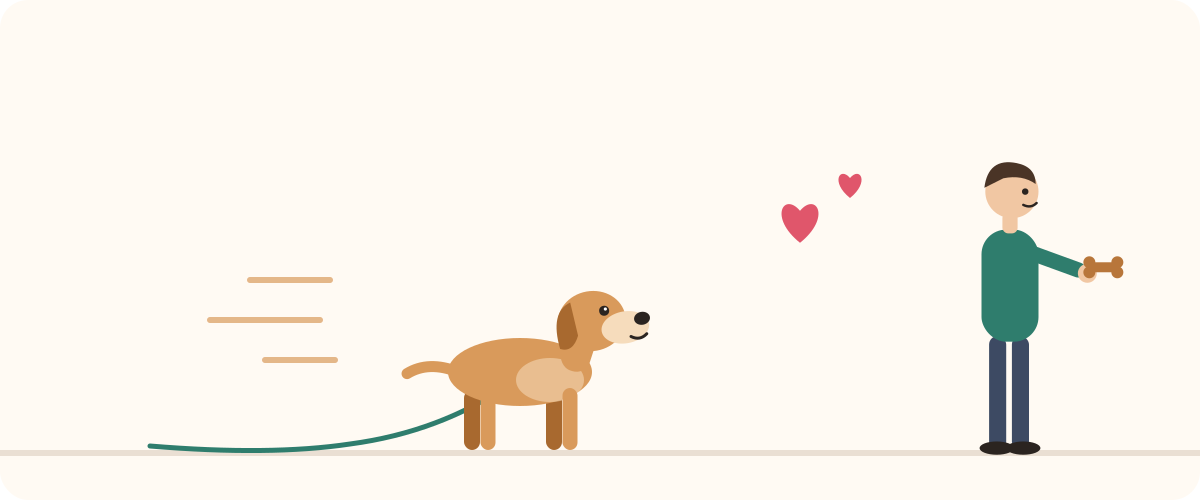
Outside, distractions explode. A long line (a 10 m lead) lets you give your dog freedom while preventing it from learning that it can ignore the recall. Never use it to reel your dog in: it is only there to stop it leaving.
Choose a biothane line: it doesn't soak up water and is easy to clean. Use it with a harness, never a collar.
Step 5: the “jackpot”
When it comes back in a difficult situation (it was playing with another dog), give a jackpot: several treats in a row, a game with its favourite toy. It will remember that it was really worth it.
So rewards are within reach at the right moment, without rummaging in your pockets.
Step 6: call… then release
Call your dog often during the walk, reward, then say “Go play!”. This is the Premack principle: coming back no longer means the end of the fun, but a reward and going back to play.
Step 7: increase the difficulty gradually
Empty park → park with a few passers-by → other dogs at a distance → dogs playing. Only move to the next level when your dog succeeds 8 times out of 10. Allow a few weeks to a few months depending on the dog.
The 5 mistakes that ruin recall
- Telling off a dog who comes back, even after 10 minutes: it learns that coming back = getting told off.
- Repeating the word over and over: it learns it can wait for the fifth call.
- Only calling to leave or for a bath.
- Chasing after it: for your dog, that's a game. Walk off in the opposite direction instead.
- Letting it off lead too early without a long line, somewhere it could put itself in danger.
Go further: the complete dog training programme · teaching your dog to stop pulling on the lead.
Read next
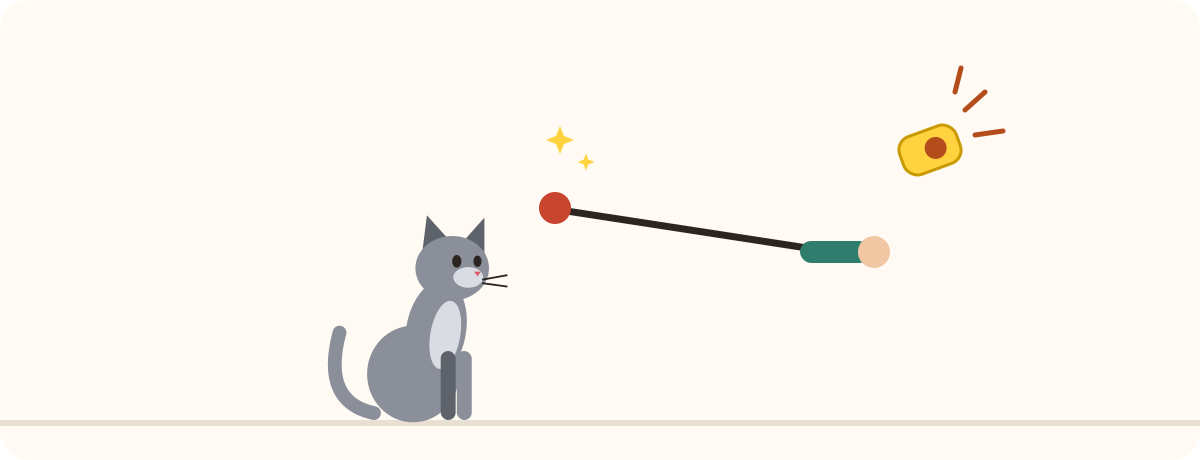
Clicker Training for Beginners: Dogs and Cats
Charging the clicker, first exercises and mistakes to avoid: the step-by-step method for dogs and cats.
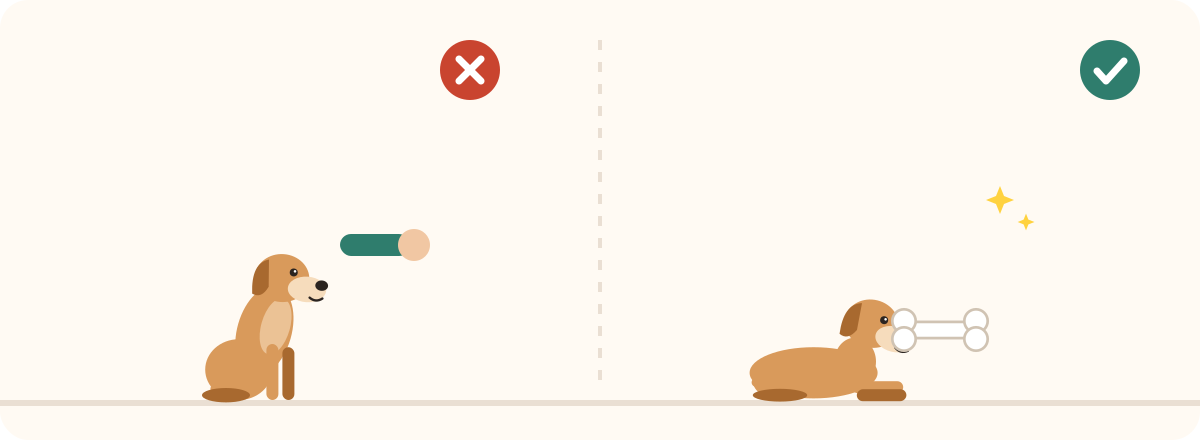
Best Puzzle Toys for Dogs: Our Comparison
Puzzles, snuffle mats, dispensers or hide-and-seek toys: which brain game suits your dog.
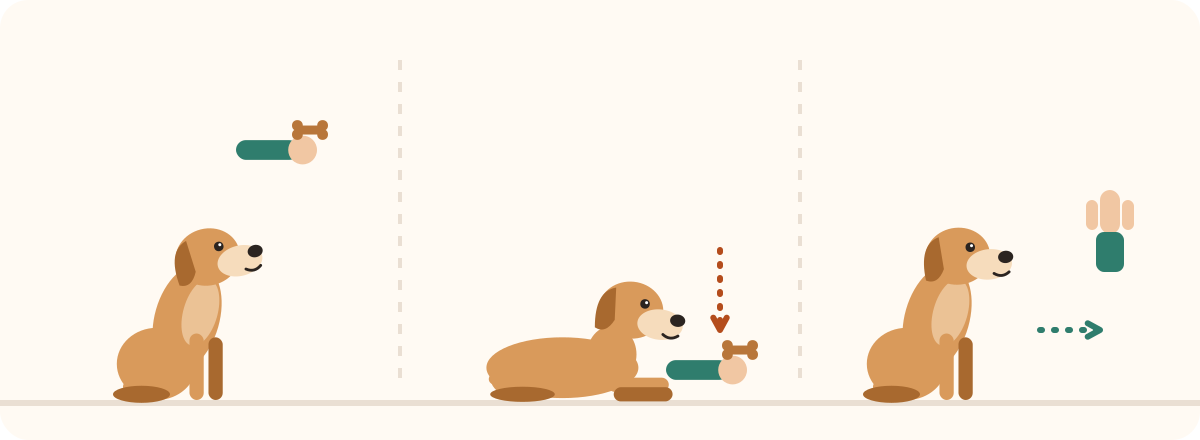
Teaching your dog "sit", "down" and "stay"
Luring for sit and down, then the "3 Ds" for a solid stay: the gentle method, step by step.