My puppy bites: what should I do?
Scratched hands, holey socks, children who are scared… Puppy biting is exhausting, but it's normal. With the right habits, it decreases noticeably within a few weeks.
Why puppies bite
- They explore with their mouths, just as a baby touches everything with its hands.
- They are teething, roughly between 3 and 6 months: chewing brings relief.
- They play the way they did with their littermates.
- They are tired or over-excited: the most underestimated cause.
1. Teach it to soften its bite
Between puppies, a little yelp stops the game when a bite is too hard. Do the same: as soon as teeth press down, stop moving, calmly withdraw your hand and stop all interaction for 10 to 20 seconds. Then resume the game. It learns that biting hard makes the human disappear.
2. Always offer an alternative
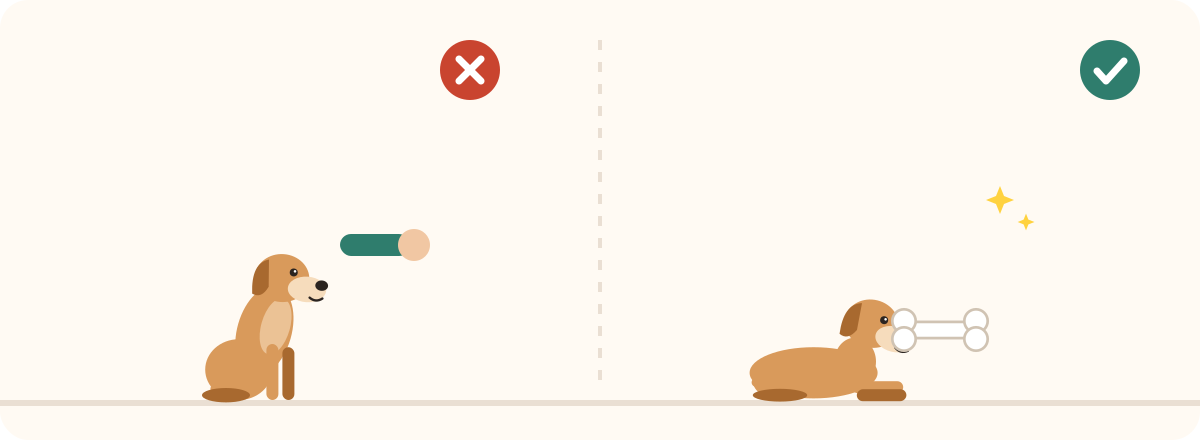
Keep chew toys within reach at all times. As soon as your puppy targets your hands: offer a toy instead. When it chews the toy: praise. This is the principle of ignoring + rewarding the alternative.
Vary the textures (soft rubber, rope, freezable toy) to soothe the gums.
3. Respect its naps
A puppy needs 16 to 20 hours of sleep a day. A puppy biting frantically at the end of the day is often an exhausted puppy. Settle it somewhere quiet in its own corner with a chew toy: it often falls asleep within minutes.
Filled with wet food and frozen, it keeps puppies busy, calms them and helps them fall asleep.
4. Channel its energy
Replace some hand games with sniffing games: hide kibble in a snuffle mat. Sniffing is mentally tiring and calming, much more than running.
An easy way to offer a calm, sniffing-based activity every day.
5. Protect the children
Children run and shout, which excites the puppy. Teach them to become “a statue” if the puppy nips, and never leave them alone together. A safety gate helps separate spaces at lively moments.
Go further: a puppy's first days · socialisation · house training your puppy.
Read next
Welcoming a puppy: the complete checklist (and what to skip)
The essentials from day one, what can wait and the pointless purchases: the complete checklist.
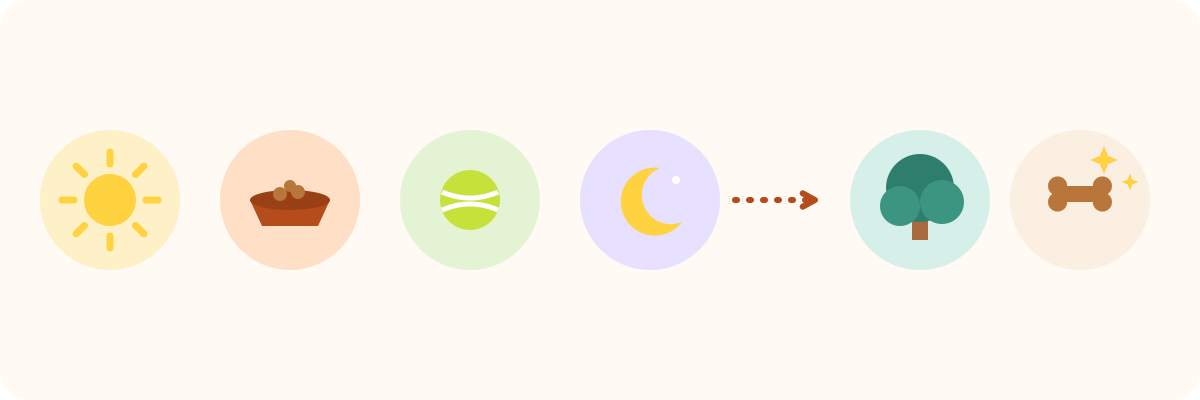
House training your puppy: the method that works
The key moments to go out, rewarding at the right time and the cleaning that prevents repeat accidents.
Clicker Training for Beginners: Dogs and Cats
Charging the clicker, first exercises and mistakes to avoid: the step-by-step method for dogs and cats.